
API integration
Table of content:
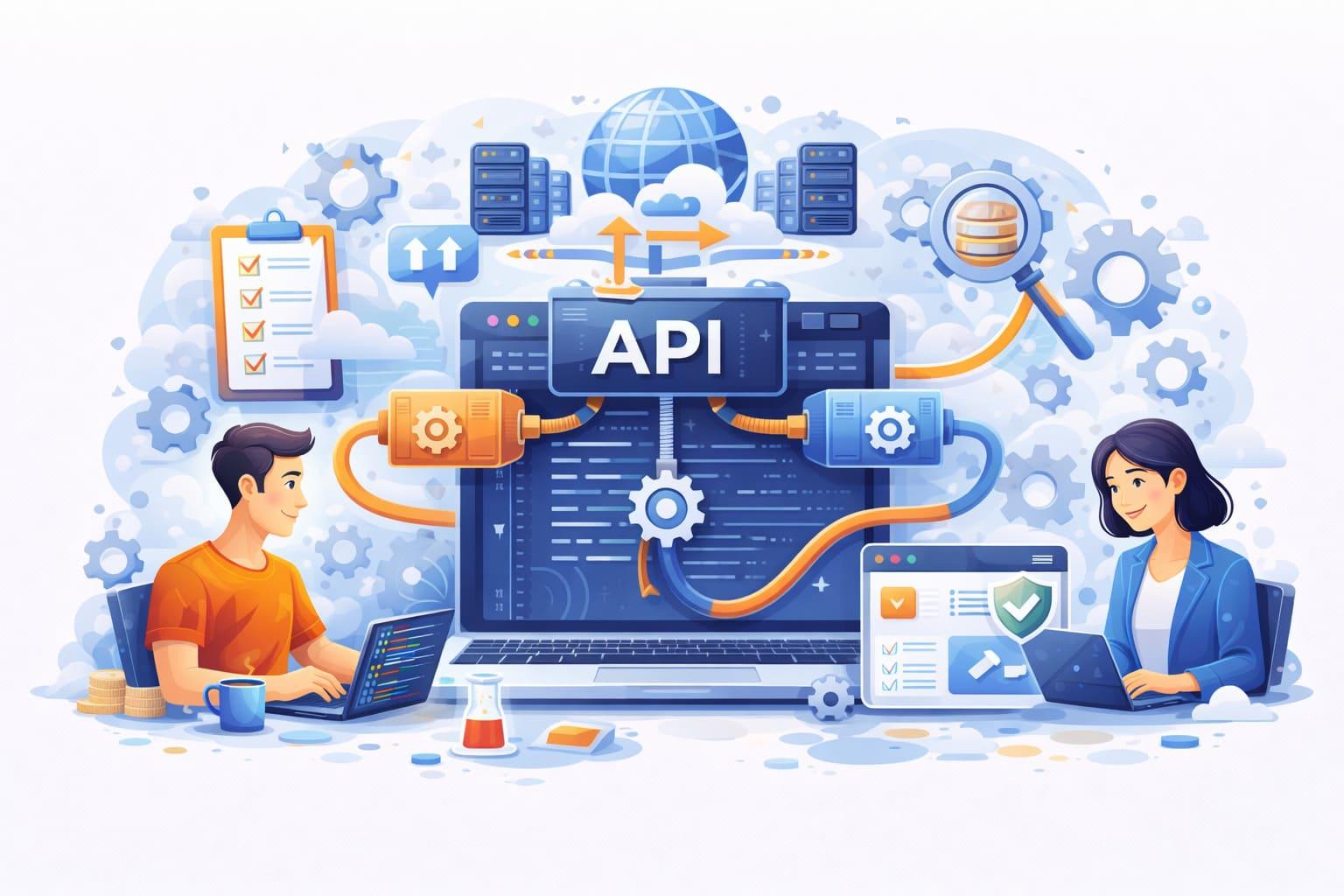
Modern websites rarely operate as isolated systems. Most digital platforms rely on external services for analytics, performance optimization, marketing automation, data management, and cloud infrastructure. API integration connects a website with these external systems, allowing data to flow securely between platforms and enabling advanced functionality without reinventing existing solutions.
Professional API integration ensures stable communication between systems, efficient data synchronization, strong security practices, and long-term maintainability.
API Architecture and Planning
The integration process begins with analyzing the project requirements and identifying which services should communicate with the website. Each external system has its own authentication method, rate limits, and response structure, so careful planning is required before implementation.
The architecture stage usually includes:
- defining data flow between systems
- selecting authentication methods (tokens, OAuth, API keys)
- designing request and response handling
- planning caching strategies to reduce API calls
- implementing fallback mechanisms for service failures
A well-designed architecture prevents performance issues and ensures the system remains stable even when external services experience delays or downtime.
Cloud Infrastructure and Performance APIs
Cloud services play an important role in website performance and global availability. One of the most commonly integrated platforms is Cloudflare, which provides CDN services, security protection, and performance optimization.
Integration with Cloudflare can include:
- automatic cache purging via API
- firewall rule management
- dynamic DNS updates
- performance monitoring
- automated deployment workflows
Using the API allows developers to programmatically control caching and security settings, which is especially useful for dynamic applications and large websites.
Analytics and Data Tracking Integration
Understanding user behavior is essential for improving digital products. API integrations with analytics platforms allow websites to collect, process, and analyze visitor data.
Two of the most widely used tools are Google Analytics and Google Tag Manager.
Integration with Google Analytics enables:
- tracking user behavior and page interactions
- measuring conversion rates
- monitoring traffic sources
- analyzing user engagement
Meanwhile, Google Tag Manager (GTM) simplifies the management of tracking scripts and marketing tags without modifying the website code each time a new tracking event is needed.
API integrations can also send custom events, synchronize data with internal systems, and trigger automated workflows based on user behavior.
Content and Knowledge Management APIs
Many modern businesses rely on external platforms to manage internal data, documentation, or workflows. One popular service in this area is Notion, which provides a flexible database and knowledge management system.
The Notion API allows websites and applications to:
- read and write database content
- synchronize structured data
- create automated workflows
- display external content dynamically on a website
For example, a website can automatically display data stored in a Notion database, synchronize blog content, or create dashboards that update in real time.
Payment and E-commerce APIs
For online businesses, integration with payment gateways and e-commerce systems is essential. APIs enable secure transaction processing and allow websites to interact with financial platforms.
Common integrations include:
- Stripe API for payment processing
- PayPal API for global transactions
- subscription management systems
- automated invoicing platforms
These integrations allow websites to process payments, manage subscriptions, and synchronize financial data with accounting systems.
Marketing and CRM Integrations
Marketing automation and customer relationship management platforms rely heavily on APIs to exchange data with websites.
Common integrations include:
- HubSpot API for CRM and marketing automation
- Mailchimp API for email marketing
- Salesforce API for enterprise CRM systems
- Zapier API for workflow automation between platforms
These integrations enable automated lead capture, customer segmentation, marketing campaign tracking, and synchronization of contact data across multiple systems.
Secure Authentication and Data Protection
API integrations require strict security practices to protect both user data and external services. Authentication credentials must be stored securely, and all communication with APIs must use encrypted connections.
Security measures typically include:
- secure storage of API keys
- OAuth authentication where required
- request validation and rate limiting
- data sanitization and validation
- protection against unauthorized requests
Proper security implementation ensures that API integrations do not introduce vulnerabilities into the website.
Error Handling and Reliability
External services may occasionally return errors or become temporarily unavailable. A professional API integration includes robust error handling to ensure the website continues to function even when external systems fail.
Important reliability techniques include:
- retry mechanisms for failed requests
- fallback responses when APIs are unavailable
- logging and monitoring of API interactions
- caching frequently requested data
These measures prevent service interruptions from affecting the user experience.
Performance Optimization
API integrations must be implemented carefully to avoid slowing down the website. Excessive API requests can create delays and increase server load.
Optimization strategies include:
- caching API responses
- batching requests when possible
- asynchronous processing of background tasks
- minimizing unnecessary API calls
Efficient integration ensures that external services enhance functionality without negatively affecting performance.
Testing and Maintenance
Before deployment, API integrations undergo thorough testing to verify that requests, responses, authentication, and data processing work correctly. Compatibility with service updates and API version changes is also evaluated.
After deployment, monitoring and maintenance ensure that integrations continue working reliably as external platforms evolve.
Professional API integration transforms a website into a connected digital platform. By integrating services such as Cloudflare, Google Analytics, Google Tag Manager, Notion, payment systems, CRM platforms, and marketing tools, businesses gain powerful automation, deeper insights, and scalable infrastructure that supports long-term growth.
Recommended Services
Explore other services that can help improve performance, stability and growth of your website.

MVP Development

Seo optimisation

Website Support and Maintenance Services

Technical Consulting for Web Development

Custom WordPress Theme Development

WordPress Development

Website Redesign and Rebranding Services

WooCommerce Development

Custom WordPress Plugin Development

Website Testing and Bug Hunting

Website Speed optimisation

Website Audit Service

Code Refactoring and Architecture Improvement